
Lime Tree
Part 13 of "A Thick Mist of Change"

Welcome to “A Thick Mist of Change,” a series of essays where I review every song on my favorite album, Cassadaga by Bright Eyes, exploring its lyrics and themes, soundscape, the musicians who contributed to the song, reflections from the artist, and the song’s place in the album. Last month I covered “I Must Belong Somewhere.”
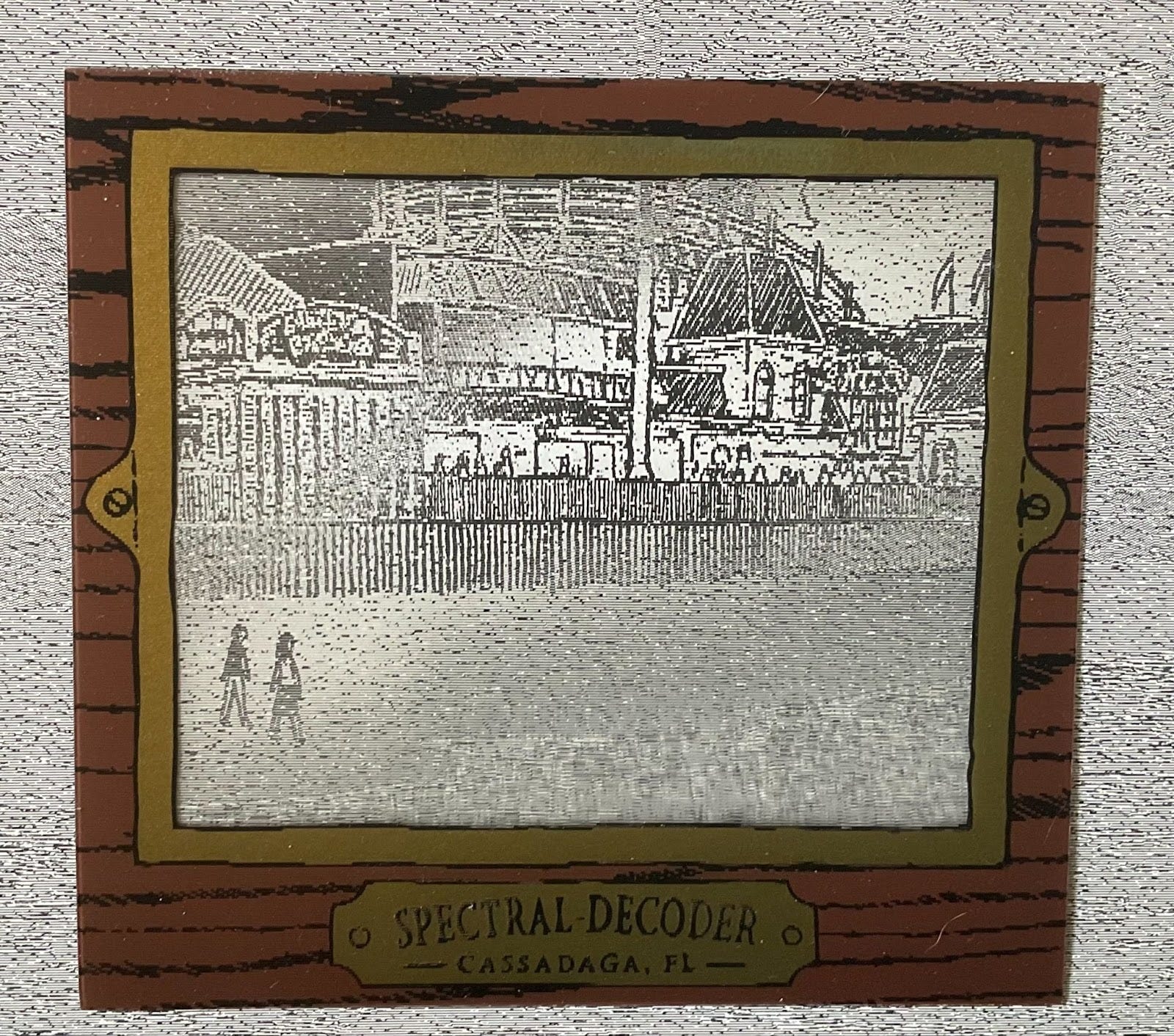
Today, April 10, 2026, is the 19th anniversary of Cassadaga. In this final entry of “A Thick Mist of Change” it is fitting to send the album off with a “Happy Birthday, darling. We love you very, very, very, very, very, very, very much.”
This essay was written without the use of generative artificial intelligence.
Lime Tree
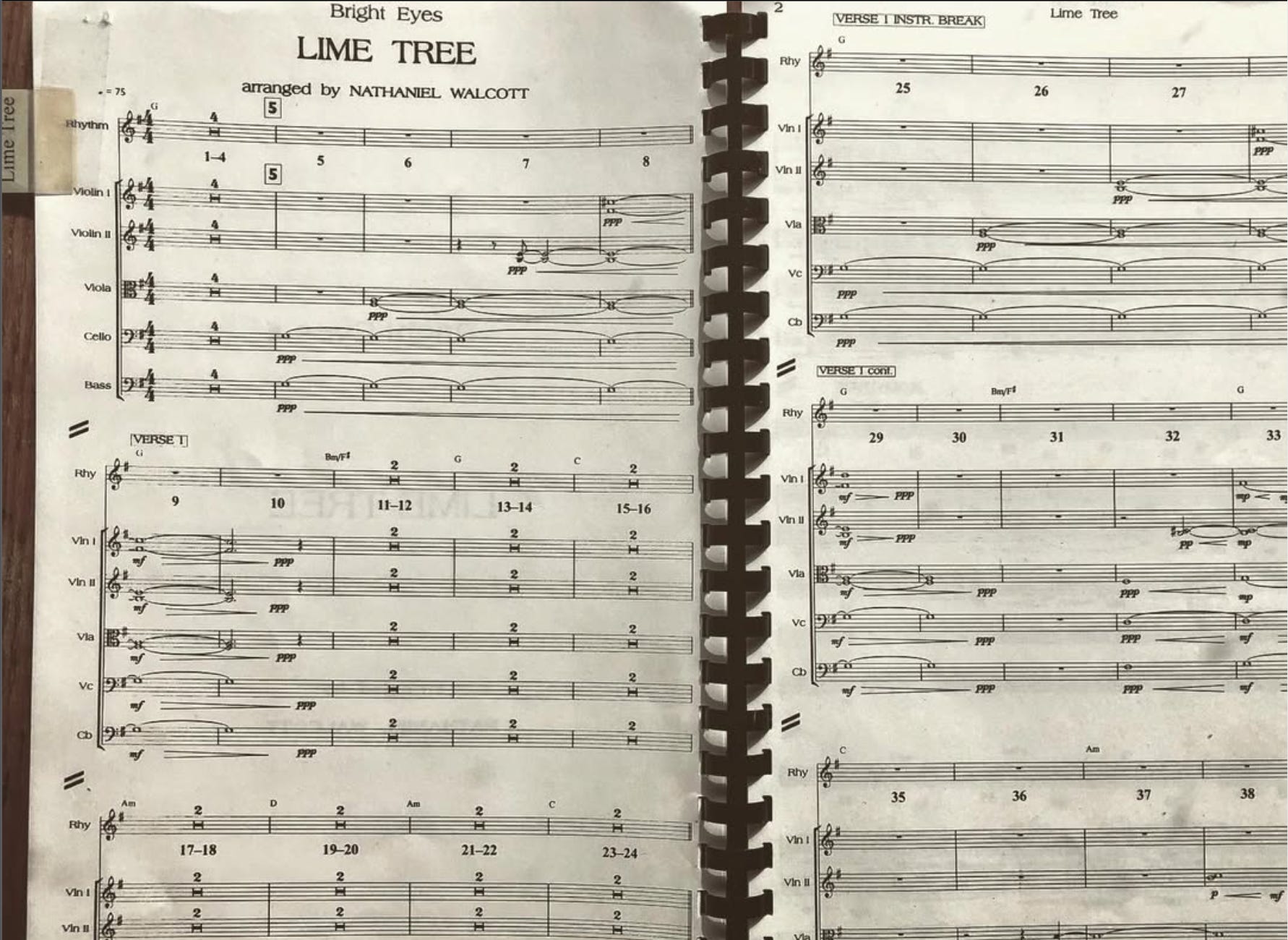
No concluding track in the Bright Eyes canon is quite as bittersweet as “Lime Tree.” After experiencing the whirlwind of an album crowded by layers of heady storytelling and luminous chamber Americana, stepping into “Lime Tree” feels like wandering into fog. The song has the quality of nighttime, a mossy and damp earthiness in its ether and a sense that we don’t quite belong here. The lonely acoustic guitar drops a sour but purposeful note - like biting into a lime - just moments in, soon bathed in a slow swell of dissonance arranged by Nate Walcott. “I think [the orchestra in] that song in particular is amazing because it actually makes me feel nauseous,” said Conor Oberst. Walcott’s symphony, conducted by Bill Meyers, embodies an endless cycle of fruit ripening, decomposing, and sprouting into something new.
The mystical overtures of “Lime Tree” have roots in its creation, if you can call it that. On Marc Maron’s podcast in 2015, Conor explained that “Lime Tree” came to him in a dream almost fully formed. Asked if he’d ever dreamt a song into existence, Conor said, “I’ve dreamt music, but as far as [something] that I could actually remember and make into a song is…‘Lime Tree.’ In my dream, a friend of mine [Nick White] who is not a singer at all… was singing this song and he had the most beautiful, high angelic voice. And he sang the whole verse and chorus in my dream. And I woke up on the tour bus and I popped up in my bunk and I got out and I sat in the back lounge and pretty much wrote it from start to finish.”
I keep floating down the river but the ocean never comes
Since the operation, I heard you’re breathing just for one
Now everything’s imaginary, especially what you love
You left another message, said it’s done
It’s done
Oberst’s vocals are dressed in reverberations that call to mind an empty moonsoaked cathedral. Singing with a tender breathiness, he opens with two heavy stories, the first a restless anticipation for something that never comes and the other an estranged phone call about an abortion. The juxtaposition is jarring, haunted with surprising contradictions. There’s a clear disenchantment with the search for an elusive greater meaning, but the person on the other end of the line is not troubled with such abstractions. She is sitting with the immediacy of her complicated, surreal feelings. This self-contained vignette offers no resolution, just the residue of a pit in the stomach so viscerally told that it ripples through the rest of the song.
In my entry about “I Must Belong Somewhere,” I noted that the last chord of the song feels deeply unresolved. “So much is communicated in this final, fading moment. It’s as though most of life exists in an unsettled in-between.” The first line of “Lime Tree” picks up on this exact notion, this sensation of floating on and on, waiting for the grand open truth to reveal itself, but never arriving. Just like “Four Winds” sweeps the listener up into a torrent of scenes as the wind might do to a leaf, “Lime Tree” gently tugs us along into its midst. There is a momentum set off with the image of floating down the river that carries the entire song along its current, slowly revealing more and more of itself to us. “You left another message, said it’s done/ It’s done.” A plucked melody lands softly and sweetly.
Conor’s woody chords are simple and direct. But they are somehow made more than they are by their placement, their tensions always resolving with an unexpected lift of a C-chord (the fourth chord in the key of G Major). Walcott’s arrangements continually shift their emphasis underneath, unearthing new discord in different parts of the sequence of chords, expanding and deflating with an unpredictable purposefulness.
When I hear beautiful music, it’s always from another time
Old friends I never visit, I remember what they’re like
Standing on a doorstep full of nervous butterflies
Waiting to be asked to come inside
Just come inside
The pause of anticipation is reincarnated in a moment standing on a friend’s doorstep, unsure if you will be welcomed in. There’s a sense of alienation here, wondering if the bonds built long ago will still hold, if whatever trust you once earned still has currency. This scene rests on the line, “When I hear beautiful music it’s always from another time.” This line makes me consider whether Conor (or his dream state) is alluding to old songs he or his companions in the early Saddle Creek scene wrote. Are the old friends he never visits actually songs that now feel foreign to him, like he has changed so much he’s unsure that they’ll accept him? Either way, the sentiment here is clear. There’s an estrangement that needs a cure.
Bootleg Corner: “Lime Tree” with David Rawlings Live at Town Hall NYC on June 1, 2007
But I keep going out
I can’t sleep next to a stranger when I’m coming down
It’s 8 a.m., my heart’s beating too loud
Too loudDon’t be so amazing or I’ll miss you too much
I felt something that I had never touched
The Cassadaga Choir lends some company alongside the screech of a synth played by Conor that moans with distress. That synth bears so much emotional gravity, like a nightmare escaping into the world. Mike Mogis manages to weave its tortured howl into a suddenly billowing soundscape seamlessly. A one night stand turns from empty to panicked with visceral honesty: “I can’t sleep next to a stranger when I’m coming down/ It’s 8 a.m., my heart’s beating too loud.” You can feel reality bearing in on another night of drugs and sex, and that hollowness when it wears off. When the orchestra bursts into full bloom with “Don’t be so amazing,” that feeling briefly evaporates and a more intimate moment glistens.
But the motion of the song never stops and we are plunged back into loneliness. The Cassadaga Choir tumbles into a haunting blend with the synth and symphony, all flowing together and then collapsing into the tart bite of a B7-chord, finally resolving on the end of the line “or I’ll miss you too much.” And we are fully submerged back into “Lime Tree’s” mysterious world with “I felt something that I had never touched.” This beautiful line holds so much in it - the intangible nature of our inner lives, the cold material world, and the clever notion that teases the two out only to mash them back together.
Everything gets smaller now the further that I go
Towards the mouth and the reunion of the known and the unknown
Consider yourself lucky if you think of it as home
You can move mountains with your misery if you don’t
If you don’t
The next string of verses veer into epistemic territory, revealing how knowledge confounds us. It’s as though we inhabit the dreams of a scientist or philosopher on the verge of a breakthrough. Further on into the mist the world shrinks down, its details more refined. The big picture has fully faded and the intricacies are kinetic. This also delivers a sense of the river narrowing, the trees crowding more and more of the bank, the passage into something else. There is something so surreal about “the mouth and the reunion of the known and the unknown” and I struggle to describe what it conjures. In my head, I’ve always imagined “the mouth” as the opening of a new ecosystem of the dream, a passageway into something distinct from all that has come before. Beyond this threshold is “the reunion of the known and the unknown,” which we are floating towards rather than ever reaching. It’s the muddle we exist within, and “Lime Tree” suggests we should be grateful to live in the space in-between. To reach the end point of complete and total understanding would actually be dreadful, the extermination of all wonder. Knowing nothing would be just as bleak. It’s the process of seeking to understand - the asking, not the answer - that gratifies us.
It comes to me in fragments, even those still split in two
Under the eaves of that old lime tree, I stood examining the fruit
Some were ripe and some were rotten, I felt nauseous with the truth
There will never be a time more opportune
This search for truth keeps breaking into smaller and smaller pieces. Every answer only spins up new questions. As the fragments perpetually split in two, the cello rocks mechanically, gently disturbing the flowing soundscape. Bouncing back and forth, these notes mimic space between the known and the unknown, and by the end of the verse they careen off their steady tempo into oblivion before reconstituting.
The lime tree itself is an image I had protected in my own imagination for many years. I pictured standing before a tree with limes weighing down the branches at different stages of their lifecycles. But I was puzzled by why Conor sang “eaves” instead of “leaves.” It wasn’t until a few years ago that I learned that Lime Tree is actually a bodega in the East Village of New York City, with eaves that hang over the front of the store and, sure enough, a small selection of fruit that you can see through the window (I made a pilgrimage last year and it was… perfectly ordinary). I had a hard time letting go of the pristine image I envisioned, but I have come to see how the scene fits into themes of disconnection that are woven through the song, since Conor is left with this artificial experience of standing outside the Lime Tree bodega instead of under an actual lime tree.

More important than the tree or market is the impermanence of the fruit they bear. All in different states of ripeness, the imminence of perishing looms and the weight of the present is palpable. It’s the constant state we occupy - between life and death, faced with the question of what we will do now. When I thought the fruits were limes, I understood the only choices to be sour and bitter. But now I know sweetness is not out of the question. How perfectly articulated this transience is in the line, “there will never be a time more opportune.” The present is all we have, and it is begging us to be a more faithful occupant of its embrace.
So I just won’t be late
The window closes, shock rolls over in a tidal wave
And all the color drains out of the frameSo pleased with a daydream that now living’s no good
I took off my shoes and walked into the woods
I felt lost and found with every step I took
All of the narrowing finally closes completely, knocking the vivid scene into grayscale. I feel a drop in my stomach when the lyrics and soundscape converge with “shock rolls over in a tidal wave and all the color drains out of the frame.” And then, perhaps the most beautiful and bittersweet line on the album rings out, with the Cassadaga Choir and symphony peaking and then getting drained: “So pleased with a daydream that now living’s no good.” This line, every time I hear it, has an almost somatic effect on me. Something I’ve felt countless times, the space of beauty and ideals and peace that I’ve only found in a moment of a wandering thought or a brief sense of awe at the ephemerality of life, is articulated so directly and sonically expressed so lucidly, that it stops me in my tracks. It’s this line that reminds us that “Lime Tree” is a journey within, a strange way to begin lacing the bow on a record so defined by place, with its allusions to American cities, the natural world, and the apocalypse settling in on civilization.
And here, as the final song on the album drops its curtains, Conor sings, “I took off my shoes and walked into the woods.” The reverb on his vocals disappears to uncover the solemn sacredness. “I felt lost and found with every step I took.” It is the same mystery as it has ever been, to live life with its darkness, but still to find beauty and wonder in it. It calls to mind a powerful Emersonian reflection:
“Crossing a bare common, in snow puddles, at twilight, under a clouded sky, without having in my thoughts any occurrence of special good fortune, I have enjoyed a perfect exhilaration. I am glad to the brink of fear. In the woods too, a man casts off his years, as the snake his slough, and at what period soever of life, is always a child. In the woods, is perpetual youth.
“Within these plantations of God, a decorum and sanctity reign, a perennial festival is dressed, and the guest sees not how he should tire of them in a thousand years. In the woods, we return to reason and faith. There I feel that nothing can befall me in life, – no disgrace, no calamity, (leaving me my eyes), which nature cannot repair.
“Standing on the bare ground, – my head bathed by the blithe air, and uplifted into infinite space, – all mean egotism vanishes. I become a transparent eye-ball; I am nothing; I see all; the currents of the Universal Being circulate through me; I am a part or particle of God. The name of the nearest friend sounds then foreign and accidental: to be brothers, to be acquaintances, – master or servant, is then a trifle and a disturbance. I am the lover of an uncontained and immortal beauty.”
- Ralph Waldo Emerson, Nature
In its swelling final moments, “Lime Tree” holds the enormity of Cassadaga inside it. It does so delicately, like the surface tension of a bubble suspended in air. It feels like peace is made with the mystery. If this is transcendence, it is a grounded kind.
The sense of alienation and inconclusiveness that takes root in “Lime Tree” has metastasized and dispersed in the years since Cassadaga was released. How are we to make meaning of our lives when the world spins madly astray from human flourishing and dignity? What moves “Lime Tree” down the stream - that forward momentum of the river - is the desire for interconnectedness and awe at the mystery of being. “I still think the wonder and mystery of things is one thing that keeps me going,” Conor said in his 2015 Maron interview. “If someone was like ‘what are you an atheist or agnostic or whatever,’ I wouldn’t really want any of those labels but I guess I would say I’m agnostic, in the sense that I do think there are things beyond the human scope that we just don’t know. I don’t know about an eternal soul or life after death or all that shit, but I do think we are part of a greater energy beyond ourselves and there is a better way to live than other ways.”
In the first post in this series, I noted the subtitle of the first track, “Kill or Be Killed,” seemed to be referencing “to love or to be loved” from the last track on Lifted. “Kill or Be Killed” is a distillation of the negative forces of the universe, the mindset of greed and creed that divides us, the things that oppress us and hurtle us towards apocalypse - the rough beast that slouches towards Bethlehem. Cassadaga’s closing line is a subtle refutation of “Kill or Be Killed” and an affirmation that a better way to live is to be “part of the mystery - to love and to be loved.”
What differentiates Cassadaga from Lifted is the path it takes to this conclusion. The raucous and defiant energy of Lifted and its final track is rooted in the friends and music that form a protective layer around the self in trying times. But Cassadaga reaches into deeper territory, the interiority of existence. If Lifted identifies “the mystery” as the source of meaning, Cassadaga feels it. The album, in all its grandiosity, ends in this scene barefoot and alone with nature in awe of simply being, an ellipsis into eternity…
Readers who have followed along for the whole series will notice that I have shed the traditional format for this final entry. Perhaps it is because it would diminish the song to pull its tenderness apart, the integrity of the song damaged by efforts to untangle its sonic vitality from what it has to say. But it felt appropriate to tear down the scaffolding and let the song breathe as it does.
I am at a loss for words as I try to land this final entry on a perch that is fitting of the album as a whole. I know I have so imperfectly articulated the breadth of this work of art. I have clumsily swung my butterfly catcher through its mystique and only come back with a few in my net. But sitting with these songs and simply trying to describe the potency of life bursting from them has made each feel closer to me, more friends now than acquaintances. My connection to Cassadaga has only deepened. Even after listening to the record what must be a few hundred times now, it still somehow surprises me with each listen. If there is one thought I can leave you with in this final entry, it is to listen close and never stop. There is great joy to be found in it.
I want to thank every person who took the time to read even one of the essays in “A Thick Mist of Change.” Our brains have been conditioned to crave information in bite-sized chunks that tickle our serotonin receptors only enough to crave the next. To ruminate in a 3,000-word essay every month is asking quite a lot of anyone. I hope the experience of it has shed light on something meaningful to you. To everyone who responded to a post or reached out personally, I cannot tell you how grateful I am for that. The Bright Eyes community is a kindhearted, thoughtful group of people that I am glad to be a part of.
If you’ve enjoyed this series, please like and share your favorite posts - it helps others find them. There is so much more that I want to say as I reflect on the closing of this journey into Cassadaga. While this is the last official entry of the Substack series, the project is not quite over - or at least that is my intention. Sometime in the next few weeks, I hope to announce what will come next. So stay tuned…